Social Science
Do You Postpone Everything? Maybe It’s Because You’re Smart (and Your Brain Won’t Stop Running)

Written By
Javanshir Huseynzade
Jan 29, 2026
Procrastination is often a side effect of a smart brain detecting threats. It is not laziness. It is protection. Discover the science behind analysis paralysis and learn simple tricks to bypass your inner alarm system.
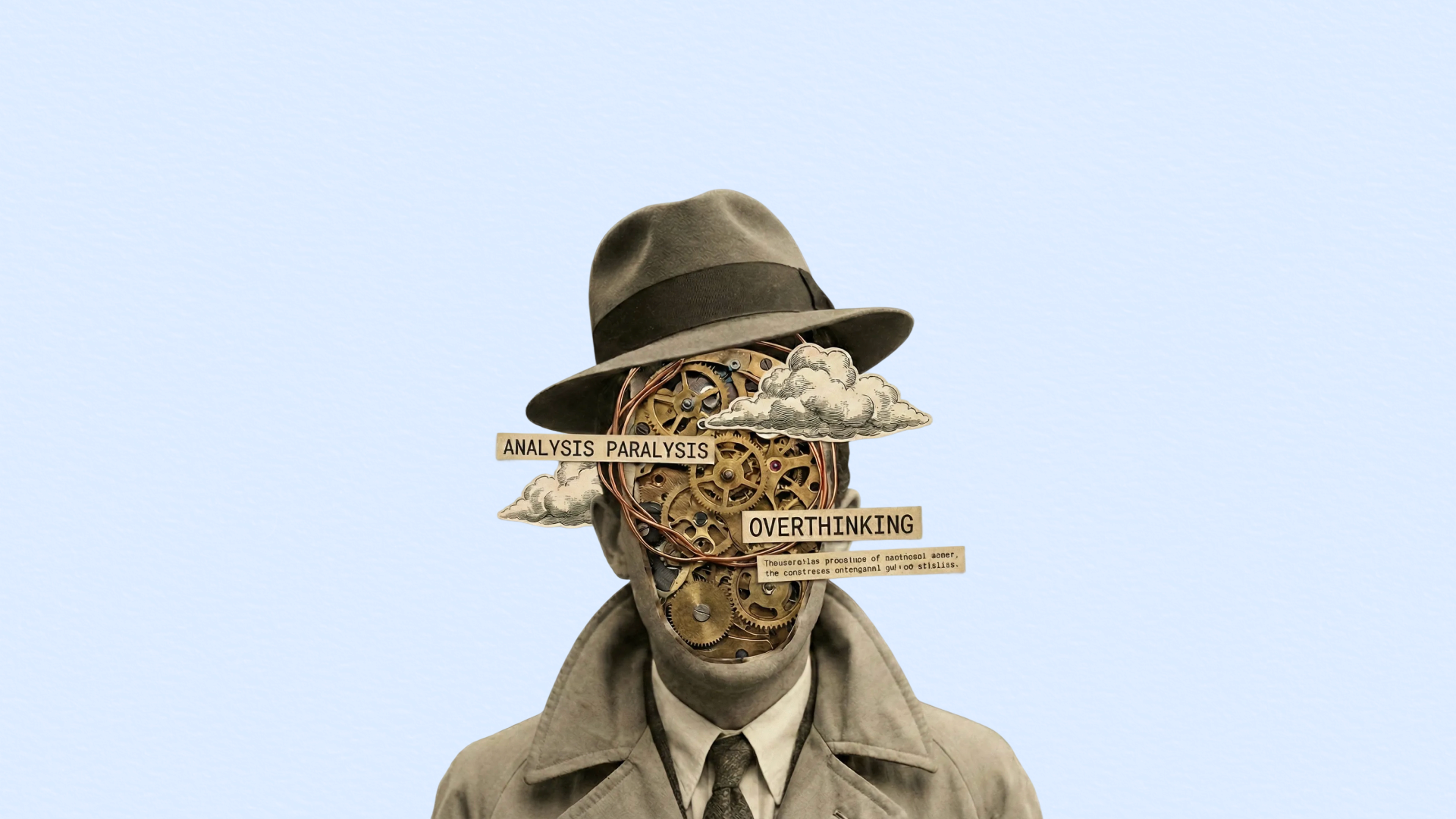
If you have ever sat down to start something important and somehow ended up cleaning your desk, answering random messages, or researching a topic you absolutely did not need to know, you are not alone. Procrastination can look like laziness from the outside, but on the inside it often feels like a noisy brain trying to protect you from something you can’t fully explain.
No motivational shouting, no “just be disciplined” speeches, and definitely no pretending your brain is a calm little monk that loves productivity.
Why Smart People Can Become Expert Procrastinators
A smart brain is very good at spotting patterns, predicting outcomes, and imagining how things might go wrong, and that ability is useful in real life. The problem starts when your brain applies the same skill to everyday tasks like sending an email, starting a project, or writing a report, because it doesn’t just see one path forward, it sees ten, twenty, sometimes fifty possible futures, and many of them are not exactly comforting.
In milliseconds, your mind can simulate failure, criticism, awkward moments, wasted time, disappointment, or that special classic scene where you try your best and still feel like you did not do enough. This is where procrastination begins for many high-thinking people, because your brain doesn’t delay work for fun, it delays work because it believes it is preventing danger.
Analysis Paralysis: When Thinking Becomes a Traffic Jam
When your brain produces too many scenarios, it can get stuck in what people often call analysis paralysis, and the task starts to feel heavier than it actually is. You are not refusing to work because you don’t care, you are refusing to start because starting means choosing a path, and choosing a path means risking that you chose the wrong one.
So instead of action, you get a mental traffic jam, and your brain politely suggests that you “just do it later,” as if later is a magical time where uncertainty disappears and confidence arrives fully dressed and ready to help.
The Amygdala: Your Inner Alarm System That Overreacts to Everything
Here’s the fun part: your brain reacts to social and emotional risk almost like it reacts to physical danger. The amygdala, which helps detect threats, does not always distinguish between a real threat and something like embarrassment, judgment, or the fear of failing publicly.
So when your brain predicts “this might go badly,” your system can shift into protection mode, and protection mode often looks like avoidance. In that moment, procrastination is not you being weak, it is your nervous system choosing the fastest exit from discomfort.
“People Who Don’t Procrastinate Are Just Braver” Is Not Always True
It’s tempting to think that productive people are simply braver, stronger, or more disciplined, but sometimes the difference is much simpler than that. Some brains generate fewer scenarios, feel less threat, and therefore start more easily, not because they are fearless heroes, but because their minds are not running a full disaster documentary before they even open the laptop.
If your brain creates more possibilities, you will naturally experience more hesitation, and that hesitation can easily look like procrastination, even when you have strong goals and real ambition.
Perfectionism: A Safety Trap Disguised as High Standards
Perfectionism often pretends to be a good thing, because it wears a nice suit and calls itself “quality,” but in many cases it is actually a safety strategy. The prefrontal cortex, which helps you plan and make decisions, sometimes builds a rule like: “If I do this perfectly, I won’t be judged,” or “If I wait until I’m fully ready, I can’t fail.”
It sounds logical, but it creates a trap where the start line keeps moving, and you end up preparing forever, improving the plan forever, and polishing the idea forever, while the real work stays untouched like a museum piece you’re not allowed to breathe on.
When Potential Feels Like Pressure Instead of Power
Smart people often carry a quiet pressure that sounds like a compliment but behaves like a burden, because the message becomes: “You could do something big,” and big things come with big expectations. When the gap between what you could do and what you are doing today feels too large, your brain tries to avoid the pain of that comparison, and procrastination becomes a quick way to escape the feeling of falling short.
This is why procrastination can increase when something matters to you, because your brain does not want to risk proving that you are not as capable as people think you are, even if that fear is not grounded in reality.
The Main Point: It’s Not You, It’s Your System
Here’s the Neurolab truth: intelligence does not stop you, your system stops you. Your brain is not trying to ruin your life, it is trying to reduce risk, but it sometimes chooses the wrong method, like using a fire alarm to warn you that your coffee might taste slightly bad.
That means you don’t need a new personality, and you definitely don’t need more self-hate. What you need is a strategy that makes starting feel safe again.
A Science-Friendly Strategy: Make the Start Too Small to Fear
The brain hates uncertainty, so the goal is not to force motivation, but to reduce the feeling of threat and complexity until your system relaxes.
A good way to do this is to make the first step so small that it feels almost silly, because silly steps do not trigger the same fear response. Instead of “finish the project,” you tell yourself, “open the document and write three messy sentences,” because your brain cannot justify panic over three messy sentences without sounding ridiculous.
You can also use a “two-minute contract,” where you promise yourself you will only work for two minutes, because the brain is much more willing to start when it believes it can escape quickly. Most people discover that once they begin, the task becomes less threatening, and continuing becomes easier, not because they suddenly became disciplined, but because their nervous system stopped screaming.
Another key move is to separate creation from evaluation, because smart brains often mix the two and start judging while they are still producing. If you write one sentence and immediately analyze it like a lawyer, you kill momentum, so it helps to create a short messy draft first and only edit later, when you already have something real on the page.
Replace “Perfect” With “Usable” and Watch What Happens
A simple mental upgrade is to replace the question “Is this perfect?” with “Is this usable?” because usable work can improve, while perfect work often never exists. Perfectionism feels safe, but progress is what actually builds confidence, and confidence is a byproduct of action, not the other way around.
One more thing that works surprisingly well is naming the fear in plain language, because vague fear is powerful, but specific fear is manageable. When you say, “I’m postponing because I’m afraid of being judged,” or “I’m postponing because I’m afraid I’ll waste time,” you turn a foggy monster into a clear problem, and the brain relaxes because it finally knows what it’s dealing with.
Your Procrastination Might Be a Sign of a Strong Brain Using the Wrong Tool
Procrastination is not proof that you are broken, and it is not proof that you lack ambition. In many cases, it is a protective mechanism driven by a brain that can simulate too many outcomes too fast, and that same brain, when guided correctly, is also the one that can build excellent work.
You don’t need to become less smart to move forward. You need to make starting feel safe, reduce the threat, and let progress do its quiet magic.
Potential is not a curse, it’s just software that needs an update.
Newsletter
Enjoyed this read? Subscribe.
Get practical research tips, interview templates, and Askiva updates straight to your inbox.
Unsubscribe at any time
Written By
Javanshir Huseynzade
Updated on
Jan 29, 2026